Why Is My Furnace Blowing Cold Air?

Furnace running but blowing cold air? Here's what causes it, what you can check yourself, and when to call Always Ready Repair.
learn more
You set the thermostat, the furnace kicks on, and what comes out of the vents is cool or room-temperature air. It's one of the most common calls we get once Chicagoland nights start dropping into the 40s. Here's how to tell the difference between a two-minute fix and a real failure.
Why is my furnace blowing cold air?
A furnace blows cold air when the blower is running but the burners aren't producing heat. The most common causes are a thermostat fan set to ON instead of AUTO, a clogged air filter, a dirty flame sensor, a failed igniter, or a furnace that has overheated and shut itself down on a safety limit. Start with the thermostat and the filter, because those two account for a large share of the cold-air calls we run.
Is your thermostat fan set to ON instead of AUTO?
If the fan switch is set to ON, the blower runs continuously — including between heating cycles, when there is no flame and nothing to warm the air. Switch it to AUTO and the blower will only run when the furnace is actually producing heat.
This is the single most common reason a furnace "blows cold." It costs nothing to check, and if the cold air stops, you've found your answer.
When did you last change the air filter?
A clogged filter starves the furnace of return air, the heat exchanger overheats, and a safety limit switch shuts the burners down while leaving the blower running to cool things off — which is exactly what cold air from the vents feels like.
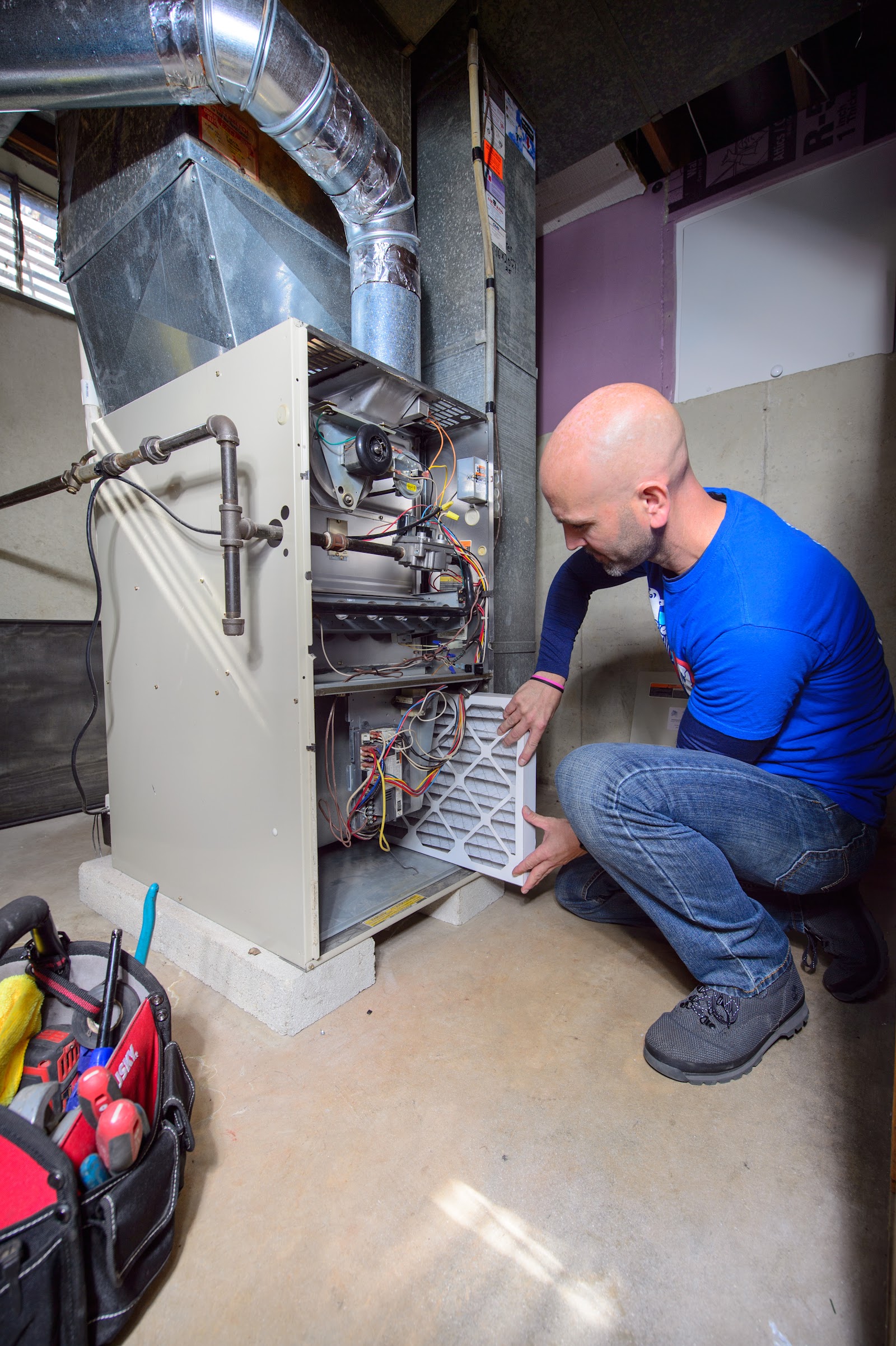
Pull the filter out and hold it up to a light. If you can't see light through it, replace it. We stock the common sizes for Chicagoland homes in our online filter shop, and a fresh filter is the cheapest preventive maintenance in the whole house.
Could a dirty flame sensor be the problem?
Yes — and it's the number one cause we find once the easy checks are ruled out. The flame sensor is a thin metal rod that confirms the burners actually lit. When it gets coated with carbon buildup, it can't detect the flame, so the control board shuts off the gas as a safety measure a few seconds after ignition. The blower keeps running, and you get cold air.
The tell: the furnace lights, runs briefly, then the flame goes out and the cycle repeats. Cleaning a flame sensor is routine work for a technician and part of every tune-up we perform.
What if the igniter has failed?
Modern furnaces use a hot surface igniter that glows orange to light the burners. Igniters are wear items — they crack and fail, usually on the first hard-run night of the season. If the igniter never glows, the burners never light, and the blower can still push unheated air through the ducts.
An igniter is not a DIY repair. It's a fragile ceramic component wired into a live 120-volt circuit, and installing the wrong part for your furnace model can damage the control board.
Is your furnace short cycling or locked out?
If your furnace starts, runs a minute or two, shuts down, and tries again, it's short cycling — and after several failed attempts most furnaces lock out entirely to protect themselves. Cold air from the vents is often the first symptom homeowners notice. A furnace in lockout needs a technician to find the underlying fault; repeatedly resetting it can cause further damage.
Could it be a gas supply issue?
If the gas valve is closed, the pilot is out on an older unit, or the gas supply to the home is interrupted, the furnace will go through its startup sequence and produce no heat at all. Check that other gas appliances in the home are working. If you smell gas at any point, leave the house and call your gas utility from outside before you call anyone else.
What can I check myself before calling a technician?
Run through these in order — they're all safe for a homeowner:
- Set the thermostat fan to AUTO and the system to HEAT, then raise the setpoint several degrees.
- Replace the air filter if it's dirty or more than 90 days old.
- Check that the furnace power switch (it looks like a light switch near the unit) is on and the breaker hasn't tripped.
- Make sure all supply and return vents are open and unobstructed.
- Confirm the furnace door panel is fully seated — a loose panel trips the door switch and the furnace won't fire.
- Check the thermostat batteries.
If you've done all six and you're still getting cold air, the problem is inside the furnace. That's where we come in.
When should I call for furnace repair?
Call a technician if the furnace lights and goes out repeatedly, if the igniter never glows, if you hear the burners trying and failing to light, or if the unit has locked out completely. Call immediately — and get everyone out of the house — if you smell gas or if your carbon monoxide detector alarms.
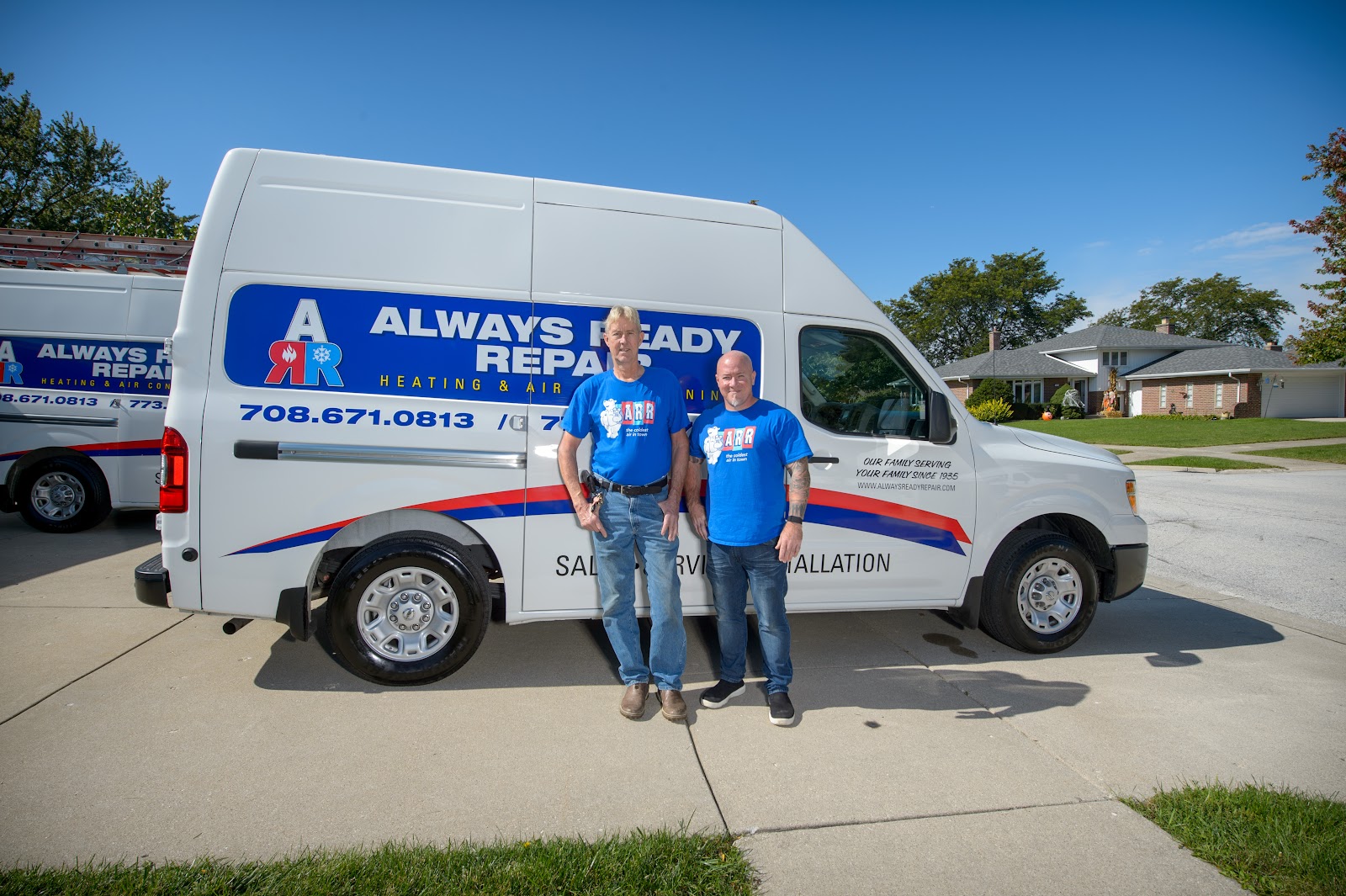
Always Ready Repair has been fixing furnaces for Chicagoland families since 1935, and we're now three generations in. Our NATE-certified technicians diagnose first and quote before any work starts, and we'll always tell you honestly whether a repair makes more sense than a replacement. We service Hinsdale, La Grange, Palos Park, Orland Park, Tinley Park and the surrounding south and west suburbs.
Book a service call online or call us at (708) 671-0813.
Furnace Blowing Cold Air FAQ
Why does my furnace blow cold air then warm air?
That pattern usually points to a dirty flame sensor or a failing igniter — the burners light, then the control board loses flame confirmation and shuts off the gas while the blower keeps running. It can also happen normally for the first 30 to 60 seconds of a cycle as the heat exchanger warms up.
Why is my furnace blowing cold air at night?
Cold nights mean longer run times, which expose problems that stay hidden during short daytime cycles — an overheating heat exchanger from a clogged filter, a marginal igniter, or an undersized system. It's the same underlying fault, just triggered by heavier demand.
Can a dirty filter really make a furnace blow cold air?
Yes. Restricted return airflow makes the heat exchanger overheat, and the high-limit switch cuts the burners while leaving the blower on. Replacing the filter often resolves it, though repeated overheating can shorten the life of the heat exchanger.
Is a furnace blowing cold air dangerous?
Usually not by itself, but the underlying cause can be. Repeated overheating stresses the heat exchanger, and a cracked heat exchanger can release carbon monoxide. If your CO detector sounds, leave the house and call for emergency service.
How much does it cost to fix a furnace blowing cold air?
It depends entirely on the cause — a flame sensor cleaning sits at the low end, an igniter or control board considerably higher. We diagnose first and give you an upfront price before any work begins. Our furnace repair cost guide breaks down what drives the price.
Can a maintenance plan prevent this?
Most cold-air calls trace back to a dirty flame sensor, a clogged filter, or a worn igniter — all things a fall tune-up catches before the first cold snap. Our Comfort Plan includes seasonal maintenance plus priority scheduling when the weather turns.