Is a New Furnace and AC Worth $100 a Month? Home Value, Comfort, and Financing Explained

What $100 a month on a new furnace and AC buys in home value, comfort and lower bills — plus an honest look at 0% and 15-year financing.
learn more
A new furnace and air conditioner is the one home improvement you use every single day, it shows up in your utility bills every month, and buyers pay attention to it when you sell. Financed over 15 years, a complete system for a typical southwest-suburban home lands right around $100 a month. Here's what that $100 actually buys — in home value, in comfort, and in what you stop paying for — and an honest look at how the financing works.
Does a new furnace and AC raise home value?
Yes, though the data says it's more about selling faster and not losing value than about a big jump in price. Three sources worth knowing:
- Zillow analyzed home sales in the 35 largest metros and found homes with central air sold for 2.5% more than comparable homes without it — about $5,500 on the typical U.S. home at the time. In the Chicago metro the premium was smaller, about 1.2%, because most homes here already have AC. The more telling number: 62% of buyers said air conditioning was a required feature, ahead of a patio or deck.
- The 2025 Cost vs. Value Report (www.costvsvalue.com) tracks what remodeling projects return at resale. Nationally, a midrange bathroom remodel recoups about 80% of its cost and a heat-pump HVAC conversion about 72%. That puts heating and cooling in the same league as a bathroom — and well ahead of a major kitchen remodel (51%) or an upscale bath (42%). ©2025 Zonda Media, a Delaware corporation. Complete data from the 2025 Cost vs. Value Report can be downloaded free at www.costvsvalue.com.
- A 2026 study by the Smart Energy Consumer Collaborative, 257, and the National Association of Realtors looked at more than half a million home sales and found that simply mentioning a heat pump in the listing lifted the sale price 0.6% to 1%. A peer-reviewed study in Nature Energy that followed the same homes before and after installation found a 4% to 7% premium.
So a bathroom remodel and a new HVAC system return similar percentages at resale. The difference is what happens in between: the bathroom doesn't lower your gas bill, and nobody walks away from a house because the bathroom is 18 years old. Buyers and home inspectors do walk away from an 18-year-old furnace — or they knock the price down to cover replacing it.
What does an old system cost you while you wait?
This is the part the resale numbers miss. A 15-to-20-year-old furnace is typically 80% efficient or less, and one that's been repaired a few times is often running below its rating. A new high-efficiency furnace runs at 95–98% AFUE, meaning almost all the gas you pay for becomes heat in the house. On the cooling side, an old 10-SEER air conditioner uses roughly a third more electricity than a modern unit for the same cooling — and with ComEd rates up about 12% this year, that gap is worth more than it used to be.
Add the repair bills. Once a system passes 15 years, a control board here and a blower motor there add up quickly, and each one comes on the coldest or hottest day of the year. Our furnace repair cost guide covers what those calls run; the rule of thumb is that when a repair costs more than half of a new system on a 15+ year-old unit, you're paying to keep a problem.
What does $100 a month actually feel like?
The comfort improvements are the ones homeowners tell us about most after an install:
- Even temperatures. A variable-speed blower runs longer at low speed instead of blasting and shutting off, so the upstairs bedrooms stop being five degrees off from the living room.
- Quiet. Modern furnaces and condensers are dramatically quieter than 2005-era equipment. Most people don't realize how loud the old one was until it's gone.
- Humidity control. Longer, slower cooling cycles pull more moisture out of the air in July, and a properly matched system stops the clammy-at-74-degrees problem.
- Cleaner air. Continuous low-speed fan operation keeps air moving through the filter all day instead of only when the system is calling.
- No more winter dread. A new system with a parts warranty means the 2 a.m. "is that noise normal?" question goes away for a decade.
How does the $100-a-month math work?
We offer financing through Service Finance Company, LLC. The two plans homeowners use most:
- 6.99% APR for 180 months (15 years). Every $10,000 financed is about $90 a month. A complete furnace-and-AC system in the $11,000 range works out to roughly $100 a month — about the cost of one streaming bundle and a couple of takeout orders.
- 0% APR for 25 months. No interest at all if you'd rather pay it off in about two years. Every $10,000 financed is $400 a month.
Two things we'd rather tell you than have you find out later. First, the 15-year plan carries real interest: on $10,000 you'll pay roughly $6,200 in interest over the full term. Many homeowners pay it off early once a bonus or a tax refund lands, and there's no prepayment penalty for doing so — but if you can swing the 25-month plan, it's the cheaper path. Second, 180 months is about the design life of the equipment, so the long plan means paying for the system for roughly as long as you own it. That's fine if the alternative is limping along with a failing furnace and paying for it in gas, repairs, and comfort; it's not fine if you're stretching the term to afford a system bigger than your house needs.
Financing is subject to credit approval. Rates and terms are set by Service Finance and can change; the current offers are on our financing page.
Is 0% HVAC financing a trap?
Homeowners ask us this a lot, usually after reading a forum thread. The concerns people raise are legitimate, so here's how to protect yourself with any contractor, including us:
- Ask for the system price before the payment. The number that matters is the total you're financing. If a company only wants to talk about the monthly payment, the price is hiding somewhere. Our quotes show the total first — that's what transparent pricing means.
- Ask whether the price changes if you pay cash. Promotional financing costs the contractor a fee, and some companies bake it into a higher price. A straight answer to this question tells you a lot about who you're dealing with.
- Know the difference between 0% APR and deferred interest. A true 0% plan charges no interest, period. A "no interest if paid in full" plan charges back all the interest from day one if you're a month late paying it off. Read which one you're signing.
- Don't let financing change the equipment. An affordable payment on an oversized or over-featured system is still the wrong system. Insist on a load calculation, and if a repair makes more sense than a replacement, a repair-first company will tell you so.
What rebates can lower the total?
The federal 25C tax credit ended for equipment installed after December 31, 2025, so don't count on that one. What's still available: ComEd rebates on qualifying high-efficiency equipment and Nicor Gas rebates on furnace upgrades. We handle the ComEd rebate paperwork for our customers, and the rebate comes off the amount financed — so it lowers the payment too. Our post on HVAC rebates has the details.
When does replacing make sense — and when doesn't it?
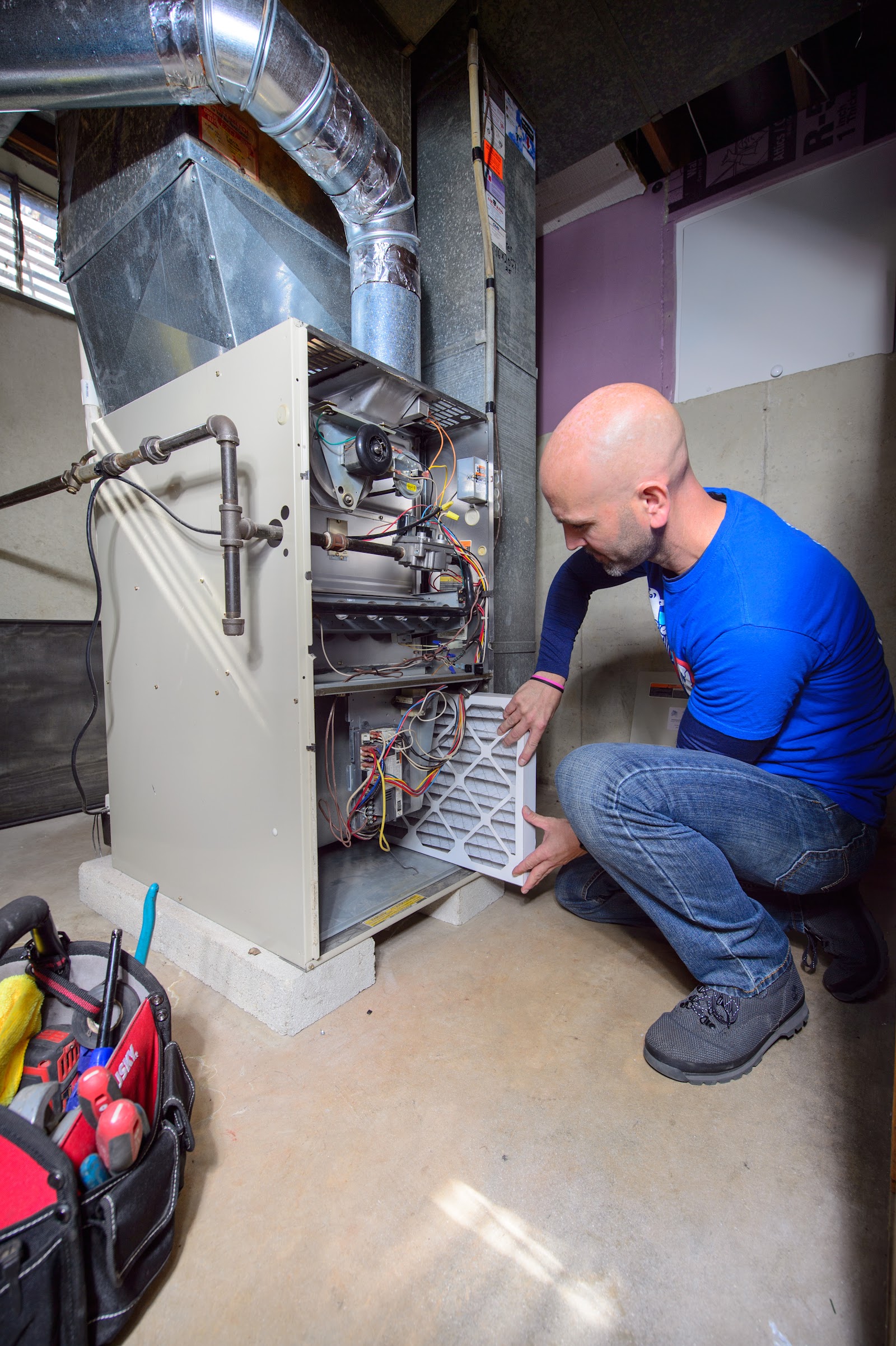
Replace when the system is 15+ years old and facing a repair that costs more than half of a new one, when the heat exchanger is cracked, or when you're planning to sell in the next few years and the inspection will flag the equipment anyway. Repair when the system is under 12 years old and the fix is modest — that's the better use of your money, and we'll say so. If your AC just died but the furnace is only a few years old, a straight AC swap is usually the right call; the dual fuel conversation can wait until the furnace retires.
The best time to have this conversation is September and October, before the first freeze, when you can compare options instead of taking whatever's available on the coldest day of the year.
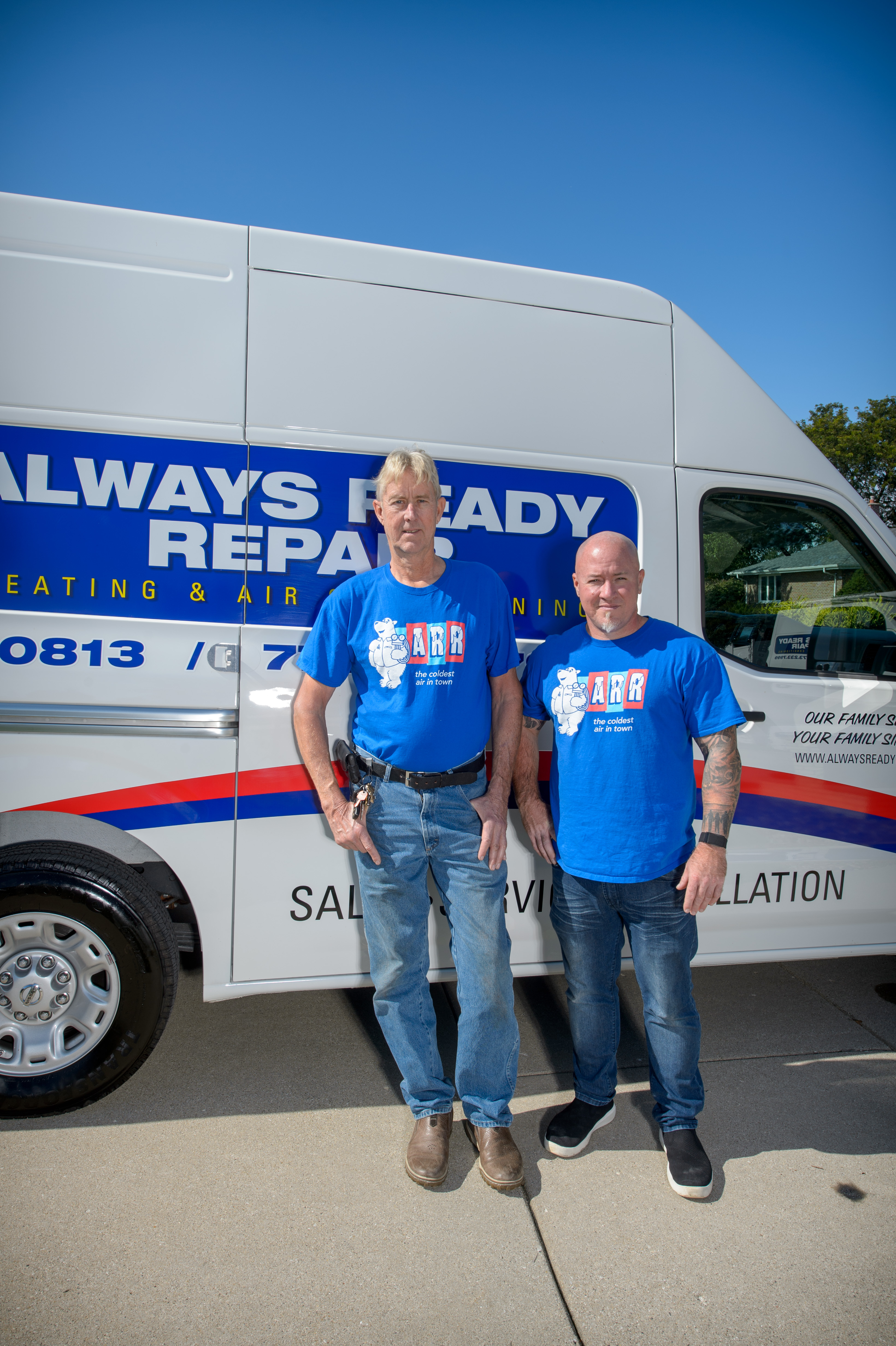
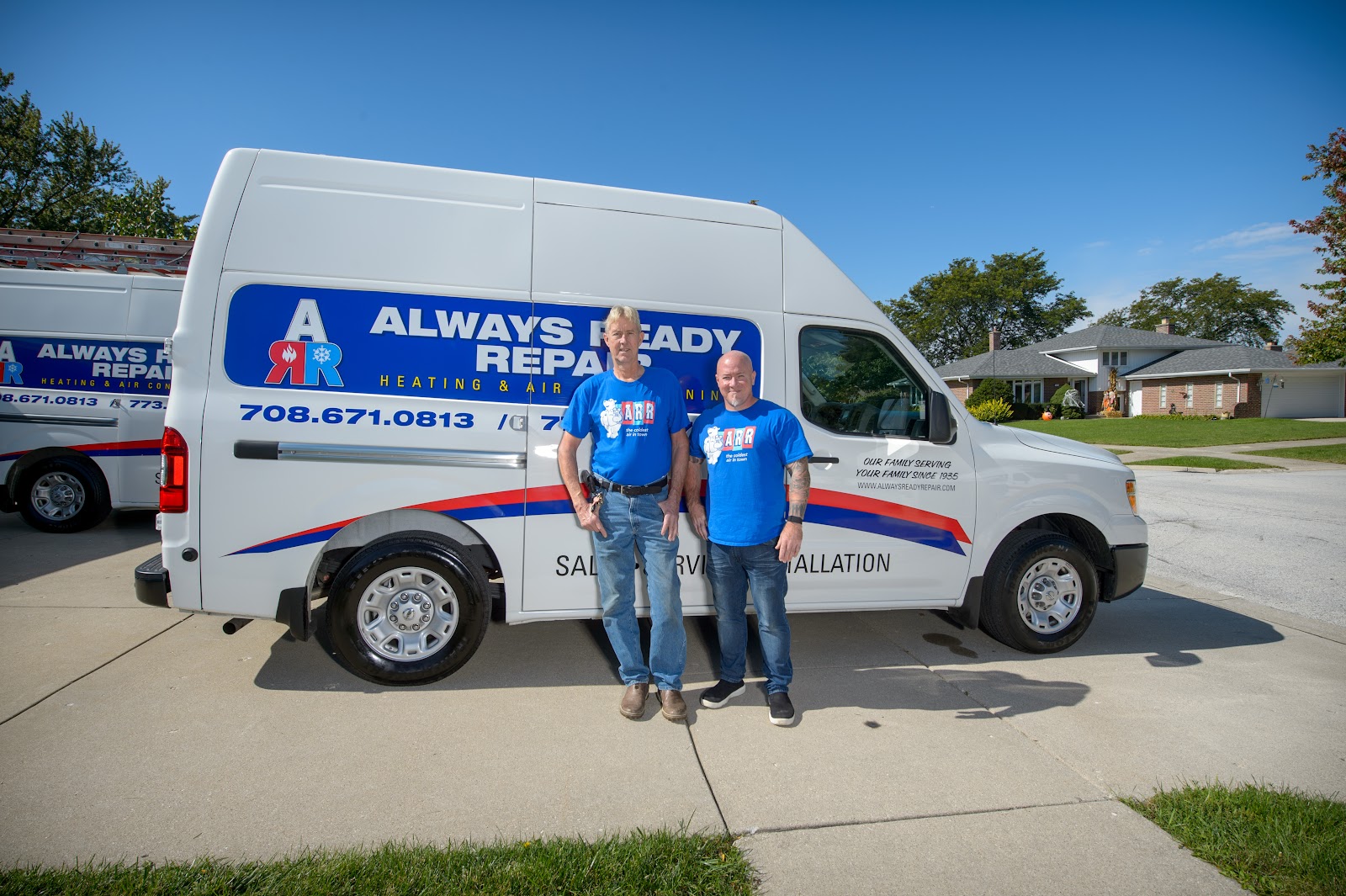
Always Ready Repair has been heating and cooling Chicagoland's southwest suburbs since 1935, three generations on. Replacement estimates are free, our NATE-certified team sizes the system to your house, and the price you approve is the price you pay. We serve Palos Park, Orland Park, Tinley Park, Frankfort, Hinsdale and the surrounding communities.
Book a free replacement estimate or call (708) 671-0813.
New Furnace and AC Financing FAQ
How much does a new furnace and AC add to home value?
Studies put the resale return between roughly 70% and 100% of the cost, similar to a midrange bathroom remodel, with the biggest effect being that buyers don't discount the house for old equipment. The monthly utility and repair savings are on top of that.
What credit score do I need for HVAC financing?
Service Finance makes that decision, not us, and they approve a wide range of credit profiles. Applying takes a few minutes and we can do it at the kitchen table during the estimate.
Can I pay off HVAC financing early?
Yes. There's no prepayment penalty on either plan, and paying the 15-year plan off early cuts the interest substantially.
Does financing cost more than paying cash?
The system price is the same. The 0% plan costs nothing extra; the 6.99% plan costs interest over the term you actually use. Ask any contractor this question directly before you sign.
Should I replace the furnace and AC at the same time?
If both are 12+ years old, usually yes — the indoor coil and blower are shared, a matched system performs better, and one install visit costs less than two. If one is much newer, replace only the failed side.