Why Does My Furnace Keep Shutting Off? Short Cycling Explained

Furnace short cycling? Here's why it keeps shutting off before the house warms up, and which causes are safety issues.
learn more
A furnace that starts, runs for a few minutes, shuts off, and starts again a short while later is short cycling. It's more than an annoyance — it drives up your gas bill, wears out expensive components, and often signals a safety system doing its job.
What is furnace short cycling?
Short cycling is when a furnace turns on and off far more frequently than it should, usually running less than about 10 minutes per cycle and never letting the house reach the thermostat setpoint. It happens either because the furnace is overheating and a safety switch is cutting it off, or because something is telling it the house is already warm when it isn't.
Why does short cycling matter?
Every startup is the hardest moment in a furnace's life — the igniter fires, the inducer spins up, and the blower motor draws its highest current. Doubling or tripling the number of cycles per day accelerates wear on exactly the parts that are expensive to replace, while burning more gas to deliver less comfort. Left alone, short cycling turns a small problem into a control board or blower motor replacement.
Is a dirty air filter causing it?
This is the first thing to check and the most common cause. A clogged filter restricts return airflow, the heat exchanger can't shed its heat, and the high-limit switch shuts the burners down. Once things cool, the furnace fires again — and the cycle repeats.
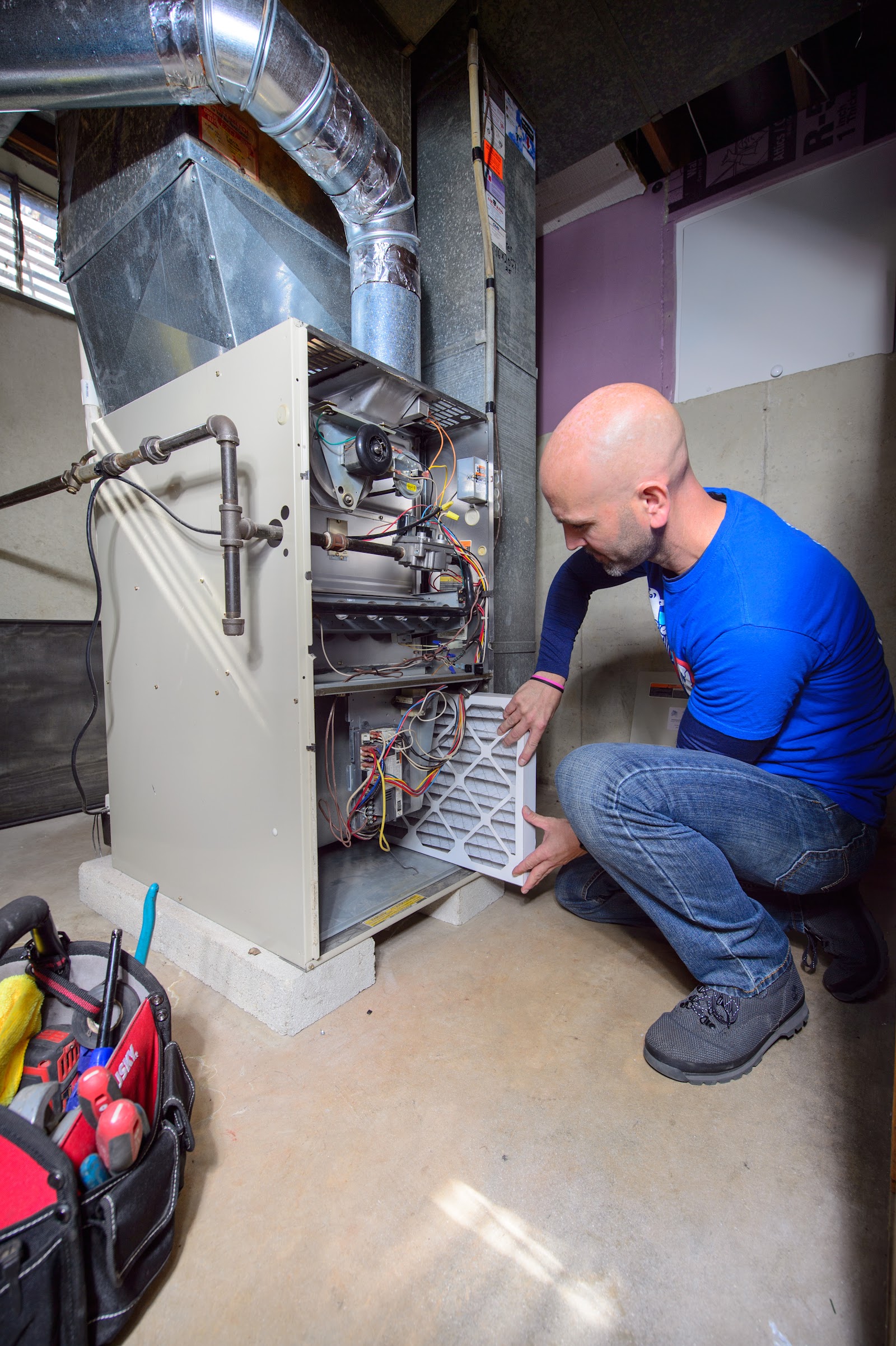
Replace the filter and give the system a day. If the cycling stops, you've found it. Keeping a spare on the shelf prevents a repeat; we stock the common Chicagoland sizes in our filter shop.
Are supply or return vents blocked?
Closed registers, furniture over a return, or a rug across a floor vent produce the same airflow restriction as a dirty filter. Walk the house and open everything. A common culprit: registers closed in spare bedrooms over the summer and never reopened.
Could the thermostat be in the wrong place?
Yes. A thermostat mounted in direct sunlight, above a supply register, near a fireplace, or on an exterior wall reads a temperature the rest of the house isn't experiencing. It satisfies early, shuts the furnace off, then cools quickly and calls again — textbook short cycling with a perfectly healthy furnace.
Loose or corroded thermostat wiring produces the same symptom by dropping the heat call intermittently.
Is the flame sensor dirty?
A carbon-coated flame sensor can't confirm the burners lit, so the control board shuts off the gas a few seconds after ignition, waits, and tries again. After three to five failed attempts most furnaces lock out entirely. If your furnace fires and dies within seconds — rather than running several minutes — this is the likely cause. Cleaning the sensor is standard tune-up work.
Is the furnace oversized for the house?
An oversized furnace heats the space so quickly that it satisfies the thermostat before completing a normal cycle, then shuts down — and does it all winter long. This is a design problem, not a repair, and it usually traces back to an installer who sized by rule of thumb instead of running a load calculation.
If your furnace has short cycled since the day it was installed, sizing is the first thing to investigate. Our post on determining your furnace's load explains how proper sizing is supposed to work.
Could it be the flue or a blocked exhaust?
A blocked flue — by a bird's nest, ice, or debris — trips the pressure switch and shuts the furnace down. So does a cracked or disconnected pressure switch hose. This one matters for safety, not just comfort: an obstructed flue means combustion gases have nowhere to go.
If your carbon monoxide detector alarms, get everyone out of the house and call for emergency service. If you don't have CO detectors on every level, install them before heating season starts.
What can I check myself?
- Replace the air filter.
- Open every supply and return vent and clear anything sitting on top of them.
- Check whether the thermostat is in direct sun or near a heat source.
- Look outside for a blocked flue termination — nests, leaves, or snow drifts against the exterior vent.
- Note the pattern: seconds-long cycles point to ignition or flame sensing; several-minute cycles point to airflow or sizing.
That last detail is genuinely useful to your technician, so write it down before you call.
When should I call a technician?
Call if the cycling continues after a filter change, if the furnace fires and dies within seconds, if you hear the burners struggling to light, or if a CO detector has ever sounded.
Always Ready Repair has been diagnosing Chicagoland furnaces since 1935, now three generations on. Our NATE-certified technicians find the actual cause instead of replacing parts until something works, and you get an upfront price before we start. We serve Crestwood, Riverdale, Palos Park, Orland Park, Tinley Park and the surrounding communities.
Book a service call online or call (708) 671-0813.
Furnace Short Cycling FAQ
How long should a furnace run per cycle?
In typical Chicagoland winter weather, a properly sized furnace runs roughly 10 to 15 minutes per cycle, two to three times an hour. On the coldest days it may run nearly continuously, which is normal. Cycles consistently under about 5 minutes indicate a problem.
Can short cycling damage my furnace?
Yes. Repeated startups are the hardest work a furnace does, and excessive cycling accelerates wear on the igniter, blower motor, and control board. It also stresses the heat exchanger through repeated heating and cooling, which is the most expensive component to replace.
Is short cycling an emergency?
Not usually, but it shouldn't wait. If it's caused by a blocked flue or a failing heat exchanger, it's a carbon monoxide risk — and any CO detector alarm is an immediate evacuate-and-call situation.
Does short cycling raise my gas bill?
Yes. A furnace is least efficient during startup, before the heat exchanger reaches operating temperature. More cycles means more of your gas goes to warming up the furnace rather than the house.
Can a tune-up prevent short cycling?
It prevents the most common causes — dirty flame sensors, restricted airflow, and drifting limit switches all get caught during seasonal maintenance. Our Comfort Plan covers that inspection twice a year, plus priority scheduling during the winter rush.