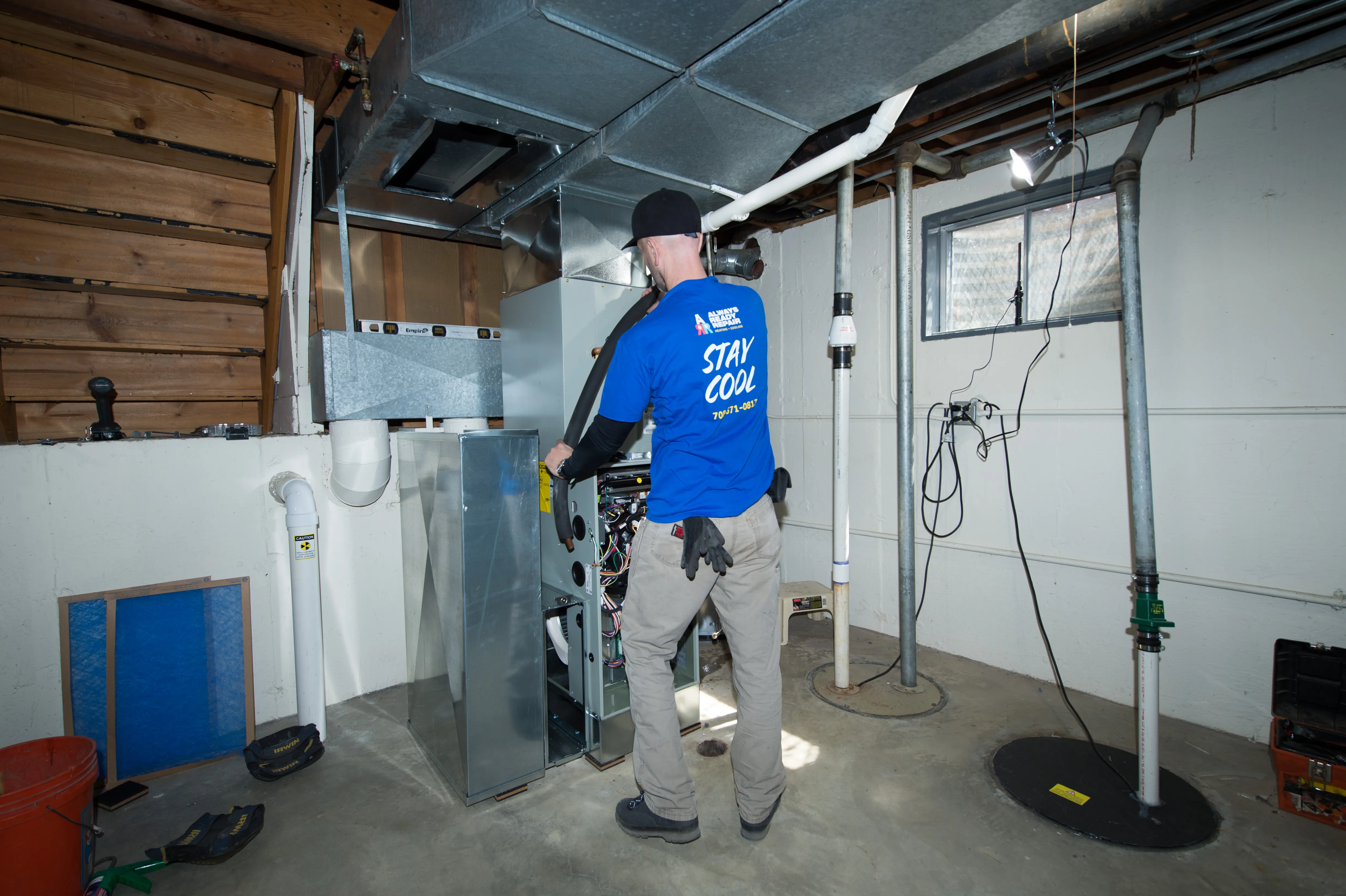
Furnace Won't Turn On? Here's What to Check First

Furnace won't turn on and the house is getting cold? Work through these checks before you call - and know which ones need a tech.
learn more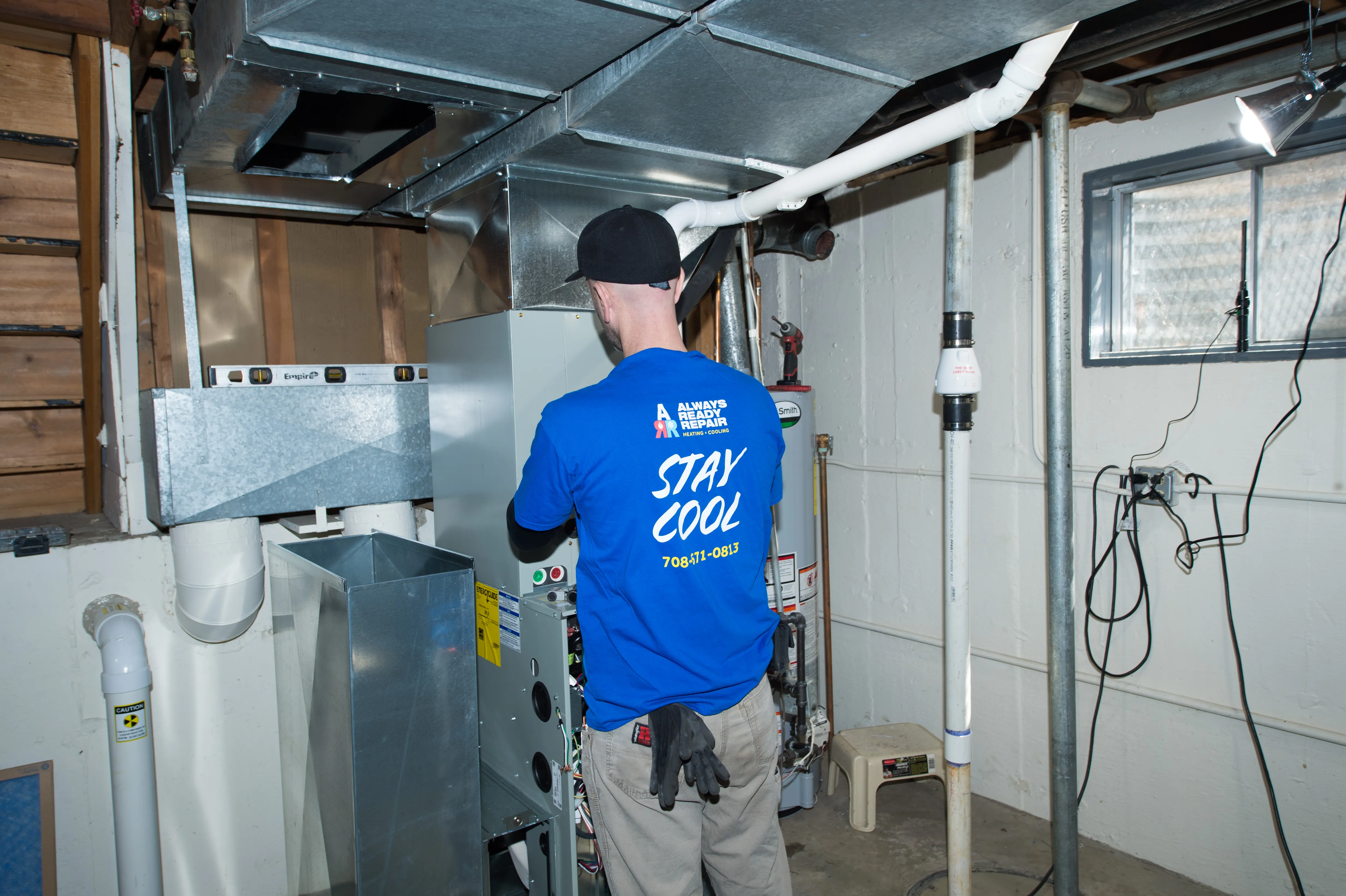
The thermostat says heat, the house says otherwise, and the furnace isn't making a sound. Before you assume the worst, there's a short list of things worth checking — several of which have nothing to do with the furnace itself.
Why won't my furnace turn on?
A furnace that won't turn on at all is almost always losing something it needs to start: power, a thermostat signal, gas, or a satisfied safety switch. The most frequent culprits are a tripped breaker, the furnace power switch left off, dead thermostat batteries, a loose blower door panel, or a clogged condensate drain that tripped the float switch. Each of those is checkable in a few minutes.
Is the furnace getting power?
Start here, because it's the most common fix. Two things to check:
- The breaker. Find the furnace circuit in your panel. If it's tripped, flip it fully off and then back on. If it trips again right away, stop — that's an electrical fault, not a nuisance trip.
- The furnace switch. There's a standard light switch on or near the furnace, often at the top of the basement stairs. It's frequently flipped off by accident during cleaning, painting, or a basement project.
Is the thermostat actually calling for heat?
Confirm the thermostat is set to HEAT (not COOL or OFF) and that the setpoint is at least five degrees above the current room temperature. Then replace the batteries — a thermostat with weak batteries can display normally but fail to send the call signal.
If your thermostat is smart or programmable, check that a schedule or vacation hold isn't overriding what you set manually.
Is the blower door panel fully closed?
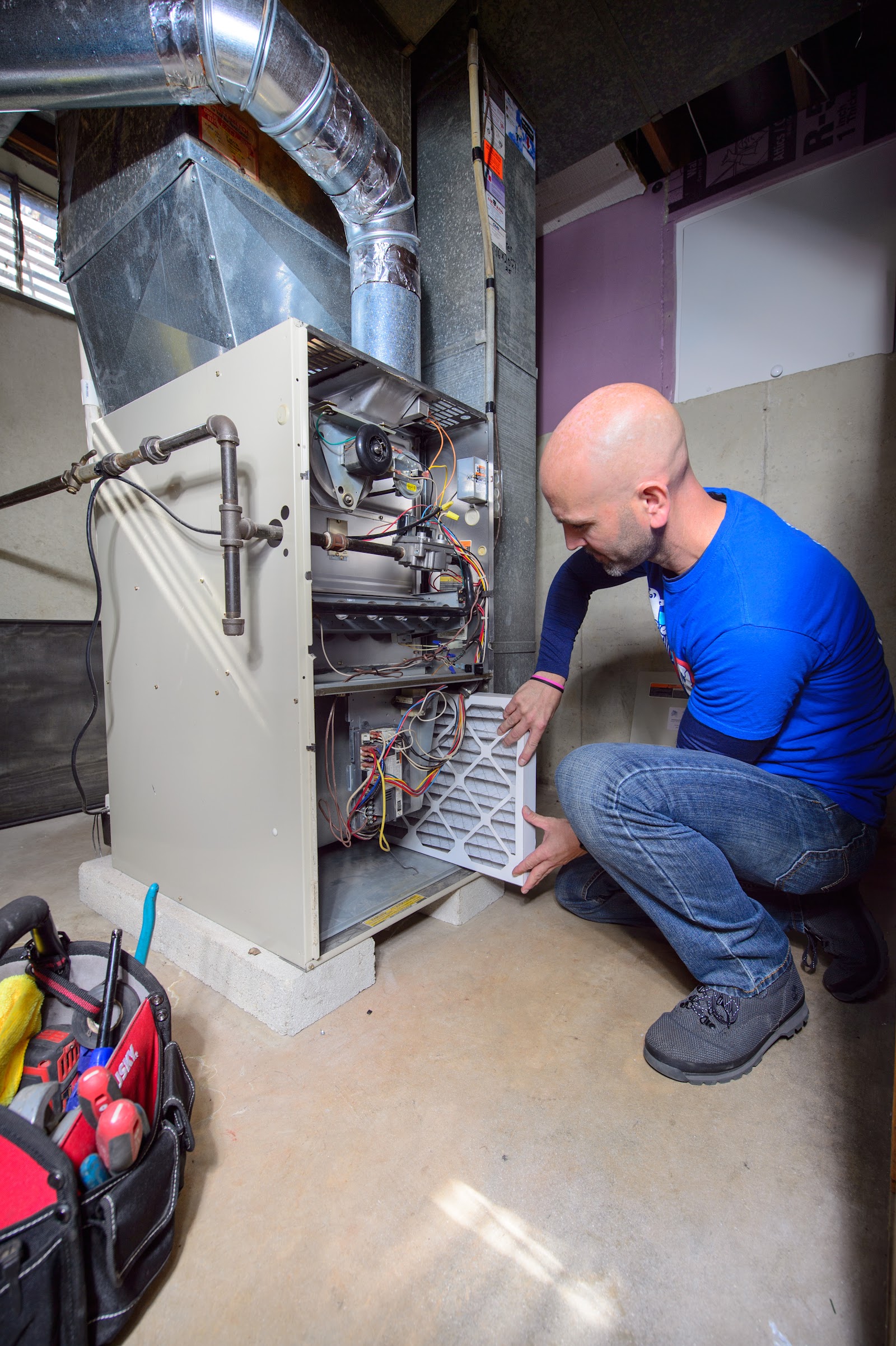
Every modern furnace has a door safety switch that cuts all power when the blower compartment panel is removed. If the panel was taken off to change a filter and not reseated firmly, the furnace will act completely dead. Push the panel in until it's flush and you feel the latch engage.
Could the condensate drain be clogged?
High-efficiency furnaces produce condensate, and that water drains through a small line to a floor drain or condensate pump. When the line clogs with sludge, the float switch senses the backup and shuts the furnace down to prevent water damage.
If you see standing water in the drain pan or around the base of the furnace, this is likely your problem. Clearing the line is straightforward for a technician and is part of a standard fall tune-up.
Is the air filter clogged?
A severely restricted filter can cause the furnace to overheat and lock out. If your furnace ran fine yesterday and won't start today, and the filter hasn't been changed in months, replace it and try again. Keeping spares on hand is the easiest way to avoid this one — we stock common sizes in our filter shop.
What if the furnace hums or clicks but won't fire?
That's different from a dead furnace, and it narrows things down considerably:
- Clicking with no ignition usually means a failed igniter or a gas supply problem.
- Humming with no blower movement often points to a seized blower motor or a failed run capacitor.
- The inducer motor runs, then everything stops typically indicates a blocked flue, a bad pressure switch, or a cracked hose.
None of these are homeowner repairs. They involve gas, high voltage, or combustion venting — call a technician.
What should I never try to fix myself?
Leave these to a licensed professional: anything involving the gas valve or gas line, igniter or flame sensor replacement, control board work, opening the combustion chamber, and any repair to the flue or venting. The risk isn't just a botched repair — it's carbon monoxide.
If you smell gas, don't touch any switches. Leave the house and call your gas utility from outside.
How do I keep the house warm while I wait for service?
Close off unused rooms, keep blinds open on the sunny side of the house during the day and closed at night, and use space heaters only where you can watch them — never while sleeping and never on an extension cord. Run water at a trickle from faucets on exterior walls if temperatures are near freezing and the outage may last overnight.
When should I call for emergency furnace repair?
Call right away if the house is dropping toward freezing, if anyone in the home is elderly, very young, or medically vulnerable, if you smell gas, or if a carbon monoxide detector has sounded.
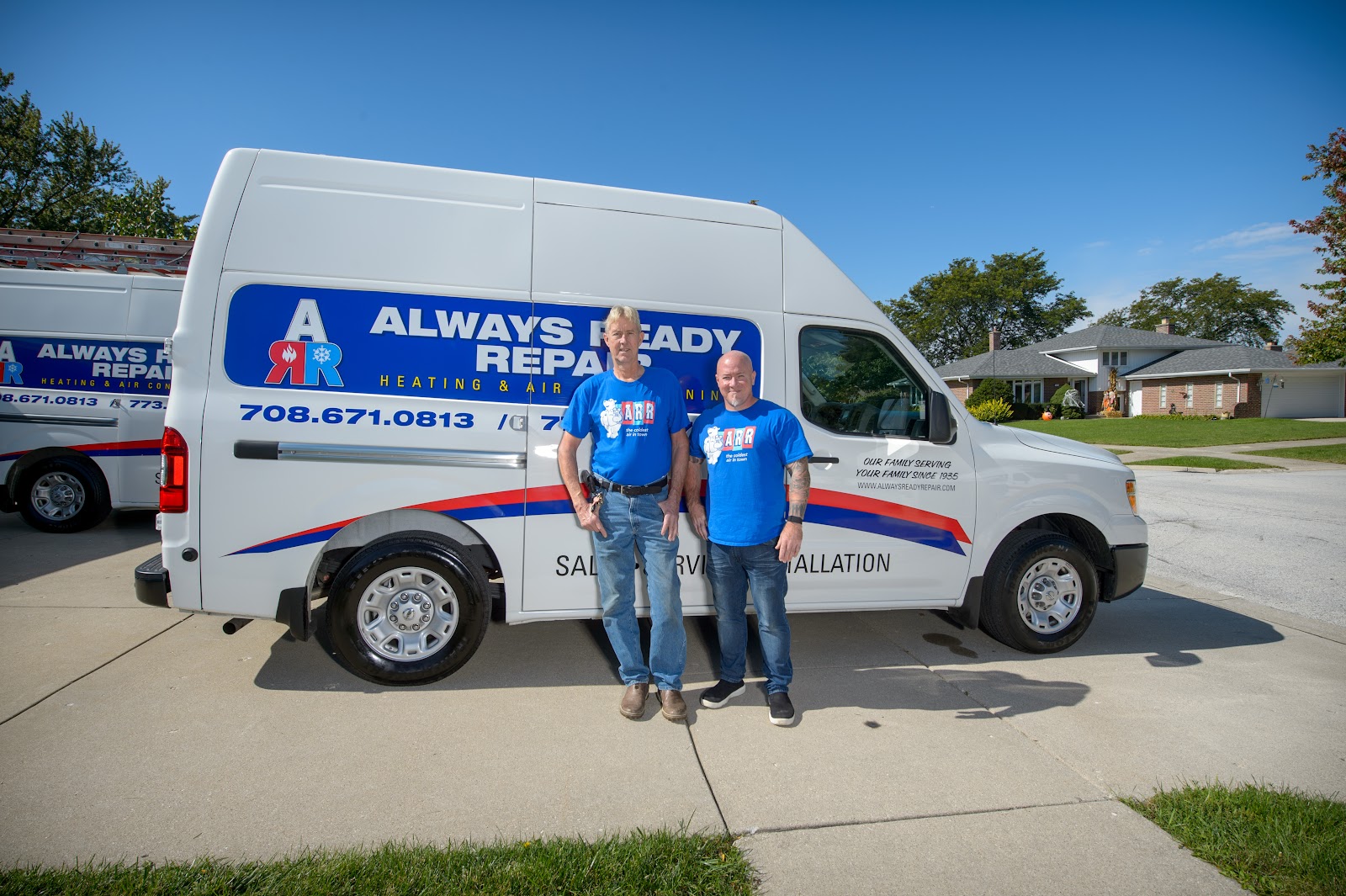
Always Ready Repair has kept Chicagoland families warm since 1935 — three generations of the same family business. Our NATE-certified technicians diagnose the actual fault before quoting, and we'll tell you straight whether a repair or a replacement is the better call for your furnace. We cover South Holland, New Lenox, Palos Park, Orland Park, Tinley Park and the surrounding suburbs.
Book a service call online or call (708) 671-0813.
Furnace Won't Turn On FAQ
Why is my furnace not turning on but the thermostat is on?
The thermostat display can be lit while the heat call never reaches the furnace — weak batteries, a wiring fault, a tripped door switch, or a furnace safety lockout will all produce this. Check the furnace power switch and door panel first, then the batteries.
How do I reset my furnace?
Turn the furnace power switch off, wait about 30 seconds, and turn it back on. If that doesn't work, cycle the breaker once. If the furnace only runs briefly after each reset, stop resetting it — a repeating lockout means a real fault, and forcing it can cause damage.
Why did my furnace stop working after I changed the filter?
Almost always the blower door panel wasn't reseated firmly enough to close the door safety switch. Press it in until the latch engages. A filter installed backward can also restrict airflow enough to trip a limit — check that the arrow points toward the furnace.
Can a furnace be too old to repair?
There's no fixed cutoff, but past roughly 15 to 20 years, parts get harder to source and the cost of a major repair starts approaching a meaningful share of a new system. We'll show you both numbers and let you decide — see our furnace replacement cost guide.
How quickly can you get someone out?
We prioritize no-heat calls during heating season. Comfort Plan members get priority scheduling, which matters most on the coldest days of the year when everyone is calling at once.