How Often Should You Change Your Furnace Filter?

How often to change a furnace filter depends on filter type, pets, and runtime. Here's a simple schedule for Chicagoland homes.
learn more
It's the cheapest thing you can do for your HVAC system and the one most often forgotten. A neglected filter is behind a large share of the no-heat calls we run every winter — here's how to get the schedule right.
How often should you change your furnace filter?
For most Chicagoland homes, change a 1-inch filter every 1 to 3 months and a 4- or 5-inch media filter every 6 to 12 months. Shorten that interval if you have pets, allergies, a large household, or you're running the system hard through a stretch of extreme weather.
What schedule fits my home?
Use this as a starting point, then adjust based on what the filter actually looks like:
- 1-inch fiberglass filter: every 30 days.
- 1-inch pleated filter: every 60 to 90 days.
- 4- or 5-inch media filter: every 6 to 12 months.
- One pet: cut the interval by about a third.
- Multiple pets or a shedding breed: cut it roughly in half.
- Allergies or asthma in the household: check monthly regardless of filter type.
- Recent remodeling or drywall work: check within 30 days — construction dust loads a filter fast.
How do I know when a filter needs changing?
Hold it up to a bright light. If you can't see light through the media, it's done. Other signs: visible dust on the intake side, weaker airflow at the registers, more dust settling on furniture than usual, or a furnace that's short cycling.
What happens if I don't change the filter?
Restricted airflow makes the heat exchanger run hotter than designed, and the high-limit switch shuts the burners off to protect it. The blower keeps running, so you get cold air from the vents — and if it happens repeatedly, the furnace may lock out entirely.
Over time, a starved system also stresses the blower motor and shortens heat exchanger life. A filter costs a few dollars. A heat exchanger does not.
What MERV rating should I use?
MERV measures how much a filter captures. Higher isn't automatically better — a filter too dense for your system restricts airflow and causes the same overheating problems as a clogged one.
- MERV 8: good general filtration, safe for nearly every residential system.
- MERV 11 to 13: better for allergy and asthma households, but confirm your system can handle the resistance.
- MERV 14 and above: generally intended for systems designed around them, not a drop-in upgrade.
If you're unsure what your furnace can handle, ask your technician at your next visit rather than guessing.
What size filter do I need?
The size is printed on the frame of your current filter — for example 16x25x1. That's the nominal size; the actual dimensions run slightly smaller. Write it on a note inside the furnace closet so you never have to guess.
We stock the sizes common in Chicagoland homes in our online filter shop, so you can keep spares on hand instead of making a hardware store run on the coldest night of the year.
How do I change a furnace filter?
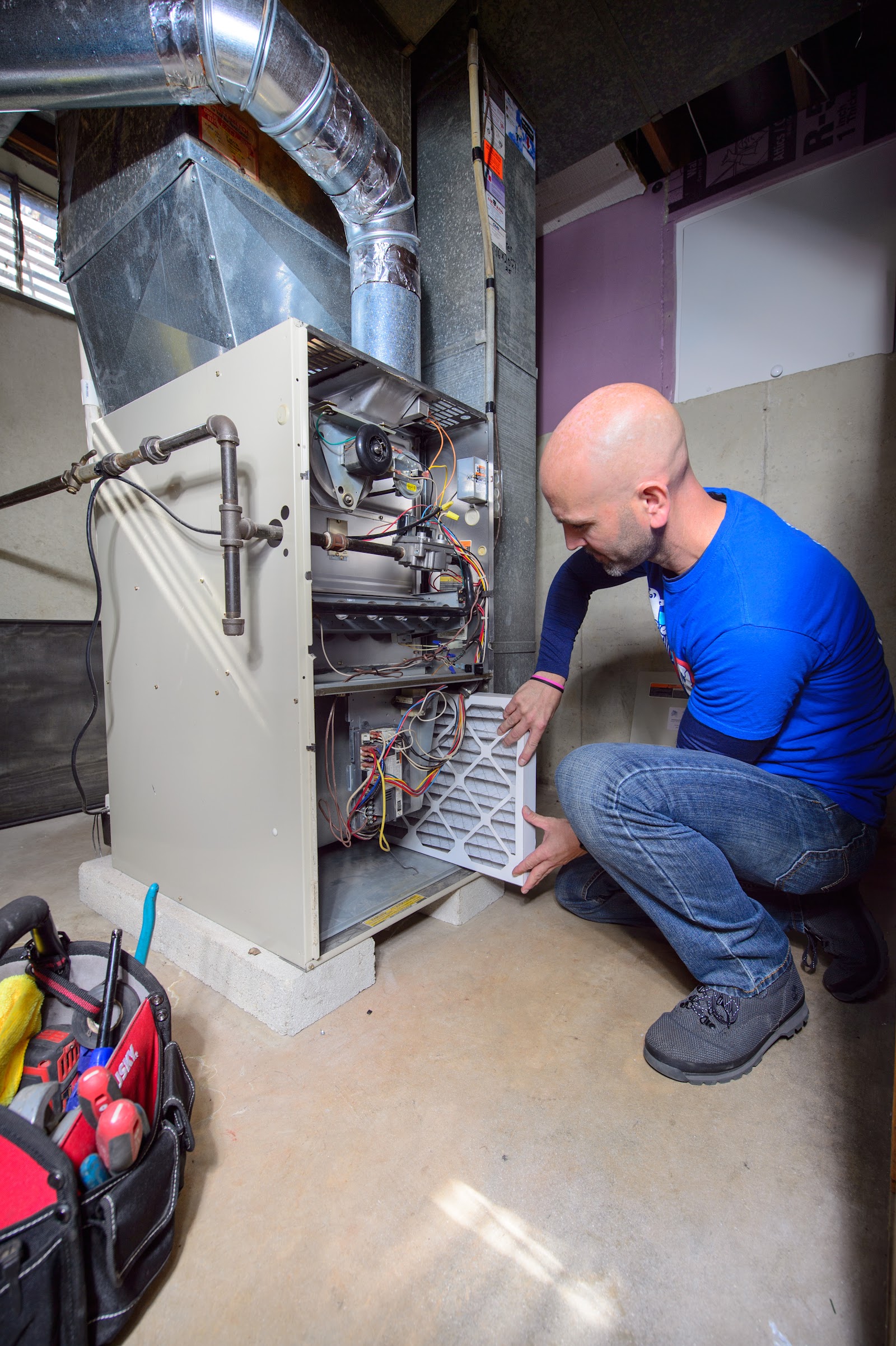
- Turn the furnace off at the thermostat and at the furnace power switch.
- Find the filter slot — usually in the blower compartment or in a return air grille.
- Slide the old filter out and note the airflow arrow on its frame.
- Insert the new filter with the arrow pointing toward the furnace, in the direction air flows.
- Reseat the door panel firmly until the latch engages. A loose panel trips the door safety switch and the furnace won't start.
- Turn the power and thermostat back on.
Step 5 is the one that generates service calls — if your furnace goes dead right after a filter change, check the panel first.
Does a clean filter actually save money?
Yes, on both sides of the ledger. A system moving air freely reaches setpoint faster and cycles less, which uses less gas. And catching restricted airflow early avoids the repairs it eventually causes — igniters, limit switches, and blower motors all fail sooner in a starved system.
Let us handle it
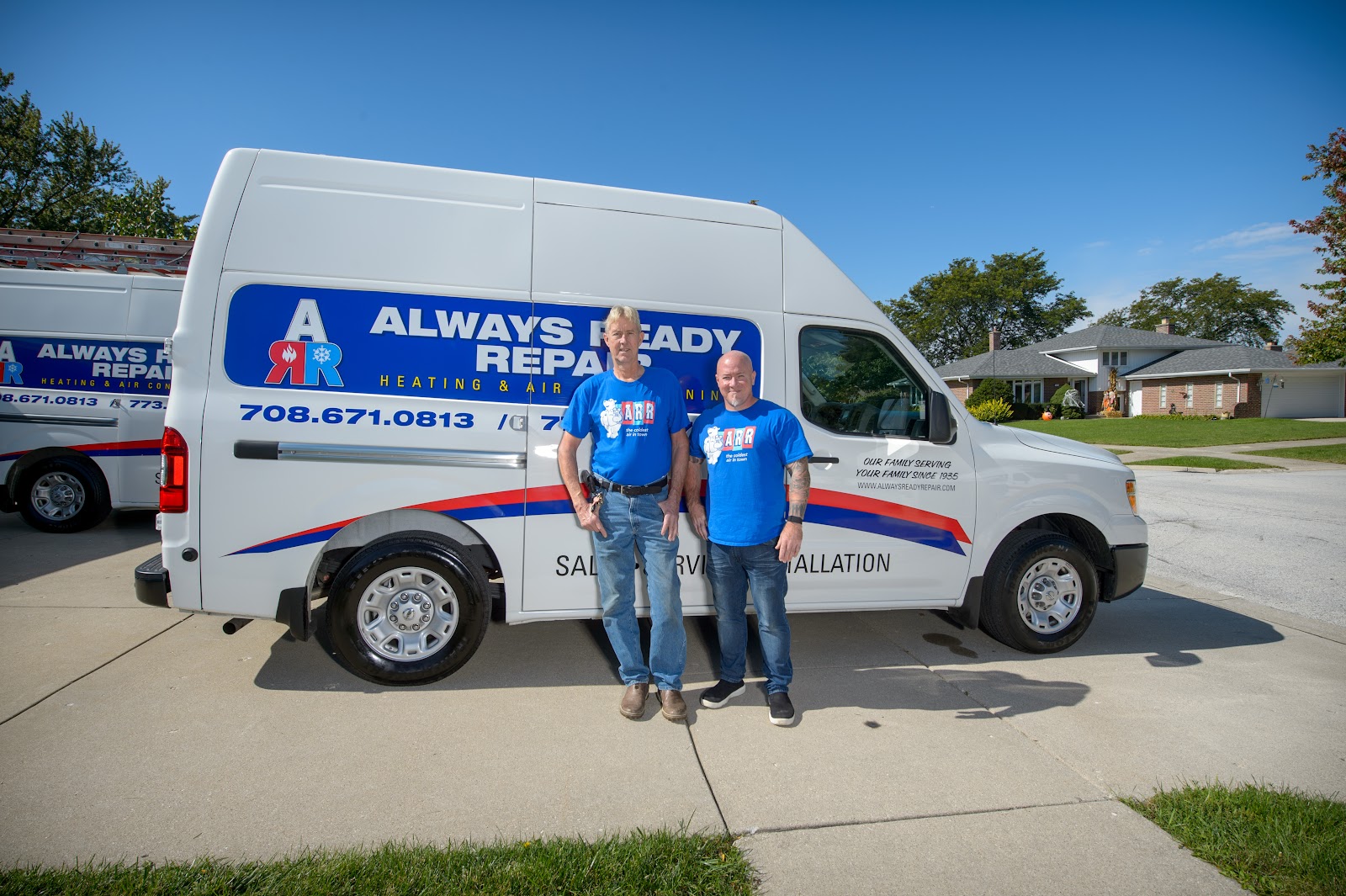
Always Ready Repair has been keeping Chicagoland homes comfortable since 1935 — three generations of the same family. Our Comfort Plan includes seasonal maintenance where we change the filter, clean the flame sensor, and catch the small problems before they become no-heat calls. We serve Hinsdale, Joliet, Palos Park, Orland Park, Tinley Park and the surrounding suburbs.
Book your fall tune-up online or call (708) 671-0813.
Furnace Filter FAQ
Can I wash and reuse a furnace filter?
Only if it's specifically sold as a washable filter. Standard pleated and fiberglass filters are disposable — washing them damages the media and lets particles straight through. Washable filters must be completely dry before reinstalling, or you'll grow mold in the ductwork.
Which way does the arrow on a furnace filter go?
The arrow points in the direction of airflow — toward the furnace and away from the return duct. Installed backward, the filter loses efficiency and can collapse against the frame, restricting airflow.
Do I need to change the filter in summer too?
Yes. The same blower and the same filter serve your air conditioning, and summer brings pollen and cottonwood. Change it on the same schedule year-round.
Why does my filter get dirty so fast?
Common causes are pets, a leaky return duct pulling in attic or crawlspace air, recent construction, or a filter with too high a MERV rating for the system. If a filter is filthy in under 30 days, it's worth having the ductwork checked.
Can the wrong filter damage my furnace?
Yes. A filter too restrictive for your system starves it of return air, which causes overheating, limit trips, short cycling, and premature heat exchanger wear — the same damage as never changing it at all.